
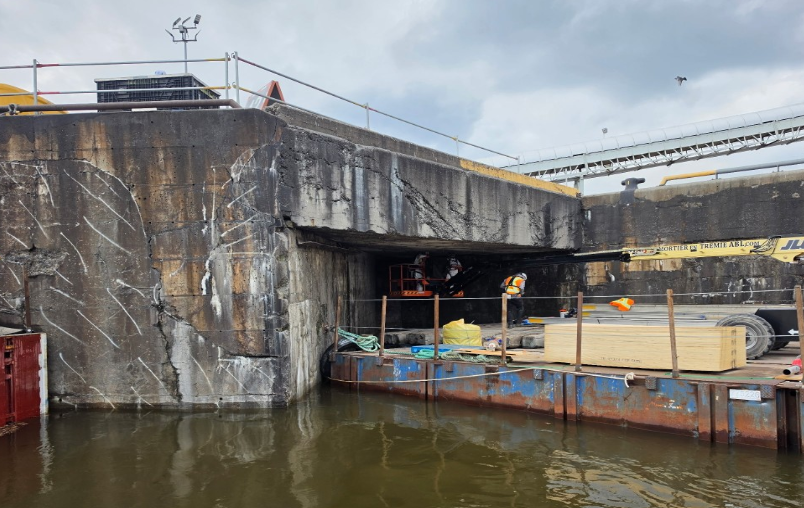
Rehabilitation of berths 39 to 42 and key 42-43: a strategic project at the heart of the solid bulk sector
Led by engineer Nora Menasria, the rehabilitation project for berths 39 to 42 and key 42-43 aims to ensure the long-term sustainability of aging infrastructure located in the solid bulk area operated by Logistec, where hundreds of thousands of tonnes of cargo pass through each year.
Century-old infrastructure in need of modernization
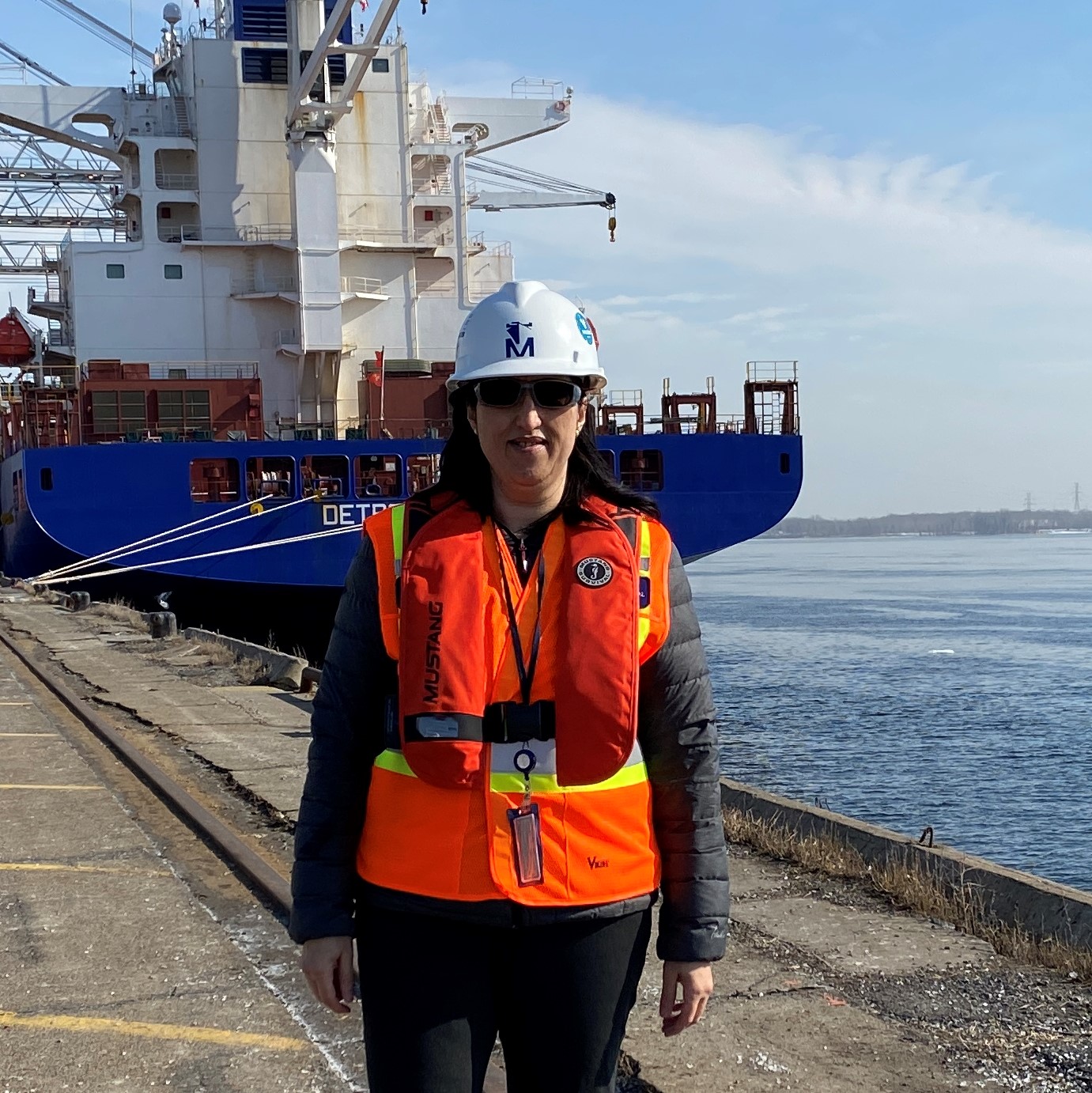
The project includes several types of interventions:
- repair of ladders and keys;
- reconstruction of the concrete face of the coping wall on berths 41 and 42 to a depth of 200 mm;
- localized underwater repairs to the concrete caissons.
A schedule spanning several months
- April: site set up and start of work on the ladders at berths 39-40;
- May: start of demolition work on the berth façade;
- May 19 to June 30: deconstruction and reconstruction of connection key 42-43;
- Until mid-December: rehabilitation of caisson joint keys, the coping wall façade, and deteriorated concrete areas on the concrete caissons.
Berth 41-42 will notably need to be closed to vessels for five weeks to allow for the complete reconstruction of key 42-43.
Working in a confined space without disrupting operations
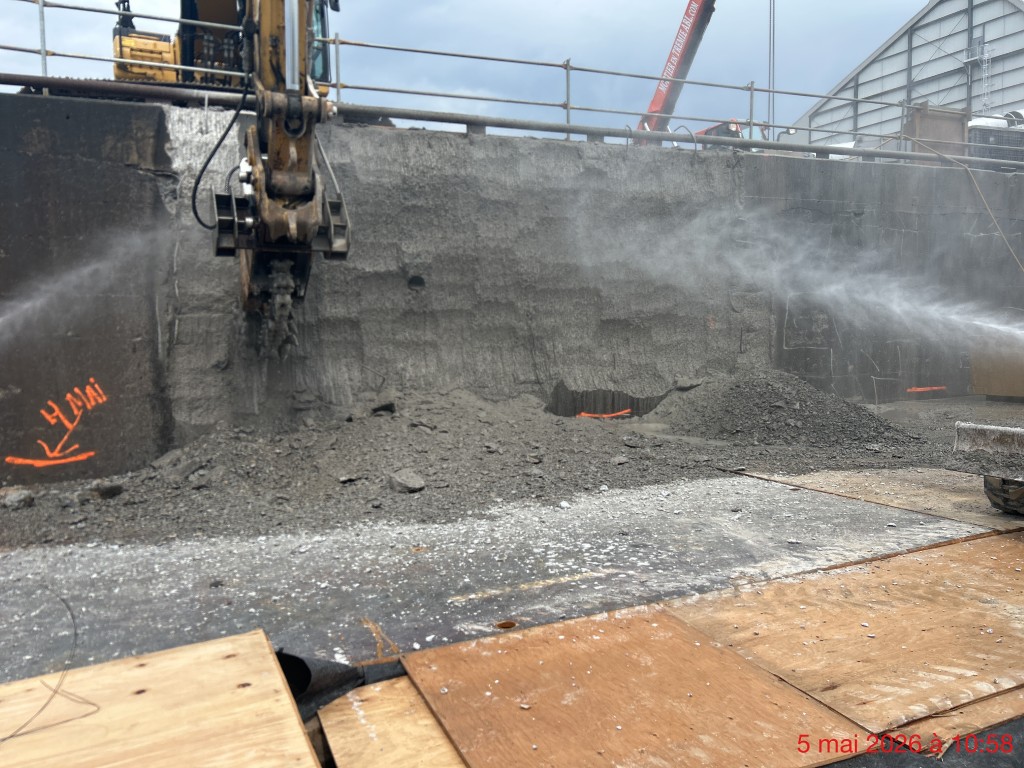
“We must avoid disrupting operations, but we also need to maintain our infrastructure. We have to adapt to the operator,” explains Nora.
In this context, the contractor had to adapt work methods to minimize impacts on port operations. Small-scale equipment was prioritized to work within the confined space directly from the top of the berth, including a compact excavator equipped with a circular attachment called a Kemrock, capable of rapidly breaking down concrete.
Underwater work and multidisciplinary mobilization
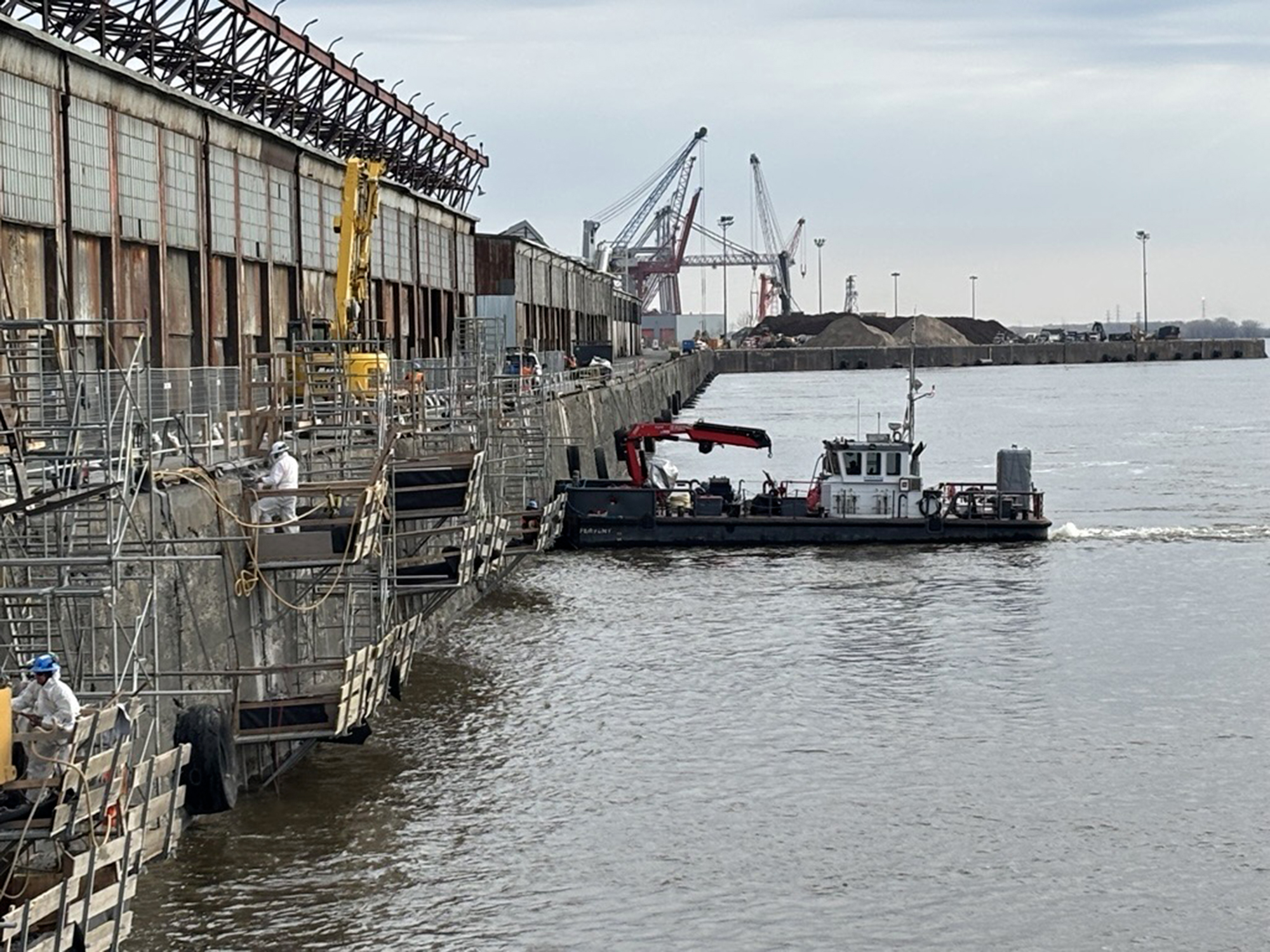
From an environmental perspective, particular attention is being paid to protect the aquatic environment. In addition to the walkways, two barges are being used to recover debris generated by the work. The entire project is being carried out in compliance with current environmental requirements. Audrey Laprade, Environmental Advisor, is supporting the inspection team in this regard.
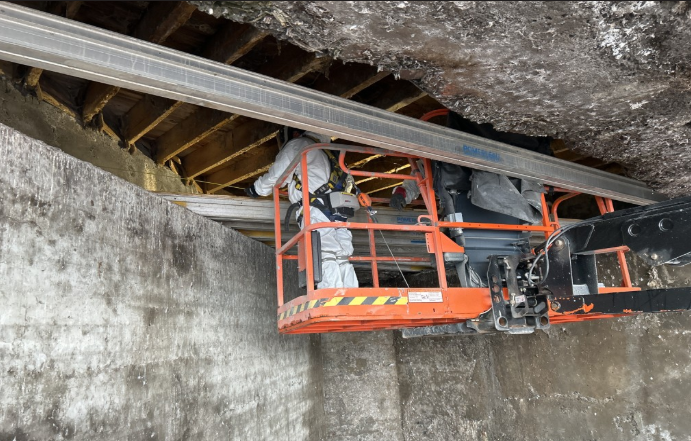
Occupational health and safety (OHS) is also a priority throughout the project. Caroline Chiasson was consulted to ensure that all necessary measures are implemented, including guardrails, compliant walkways, lifelines, site fencing, and procedures ensuring workers remain tied off at all times when required. Caroline will also conduct OHS audits on site.
Congratulations to all the teams mobilized for this major project!
May 14, 2026