The Port from the River
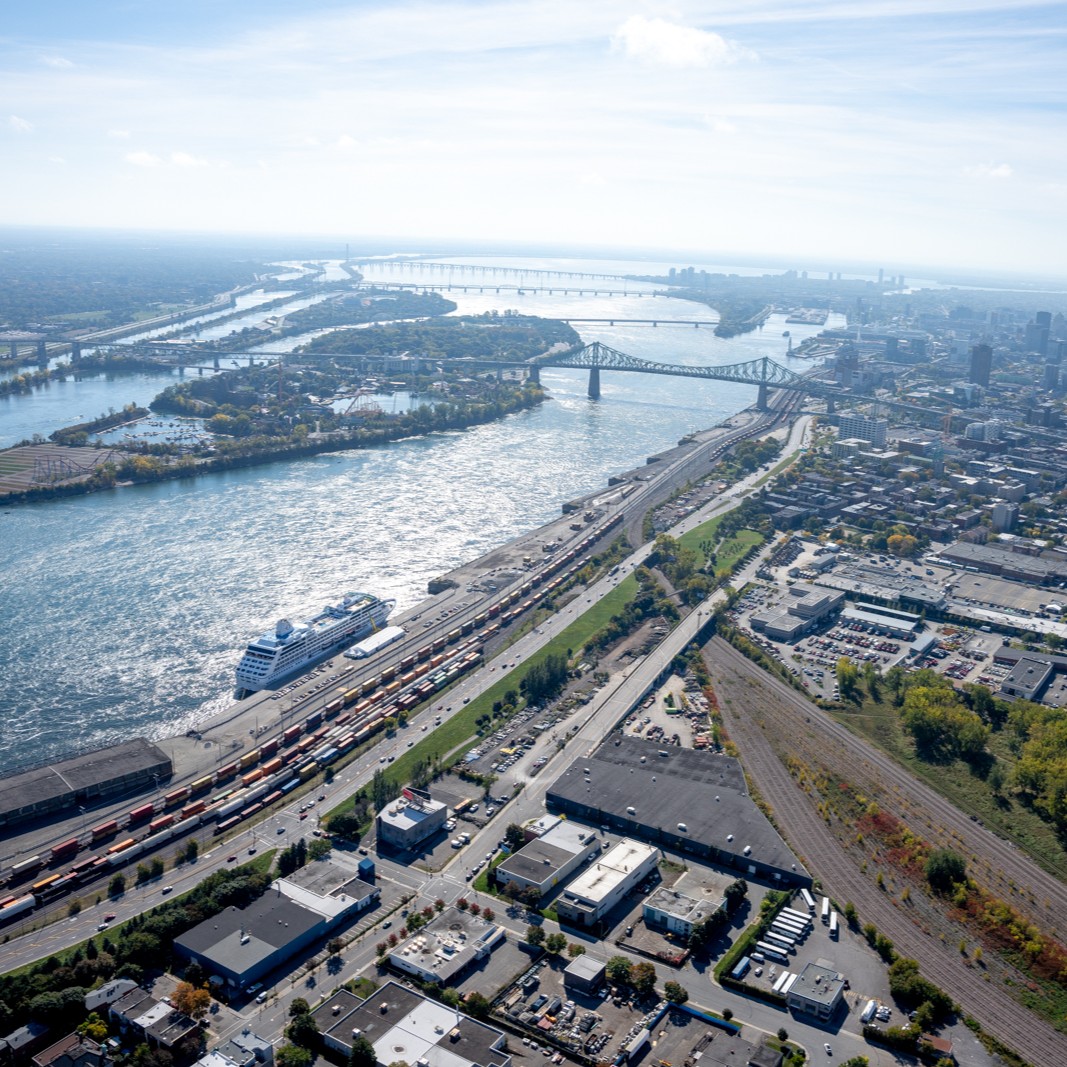
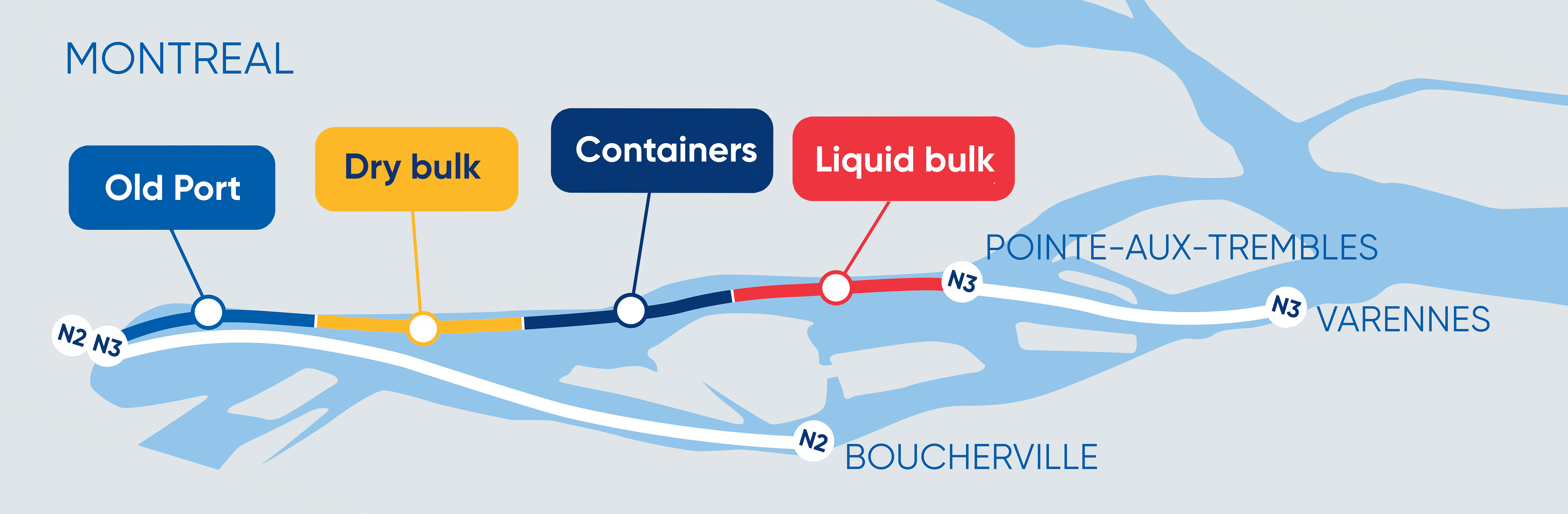
From the river, the Port of Montreal reveals an impressive yet little-known landscape. Along the way on the river shuttle, locate the four stops on the map and listen to the audio clips to discover the history, facilities and activities unfolding before your eyes.
>> Navark’s N2 and N3 shuttles: Old Port–Boucherville or Old Port–Pointe-aux-Trembles-Varennes.
HOW IT WORKS
How to enjoy the tour
Find your location
Follow the shuttle route and locate the stops on the map. Each audio clip is numbered and colour-coded.
Take in the scenery
Identify the port facilities in front of you.
Play the audio clip
Press play and listen to the story of the area as you travel alongside it.
You can listen to the audio clips in either direction and at your own pace. Headphones are recommended. Playback never starts automatically.
THE MAP
Four stops along the river
THE AUDIO CLIPS
Four stops, four stories
Stop 1
Old Port
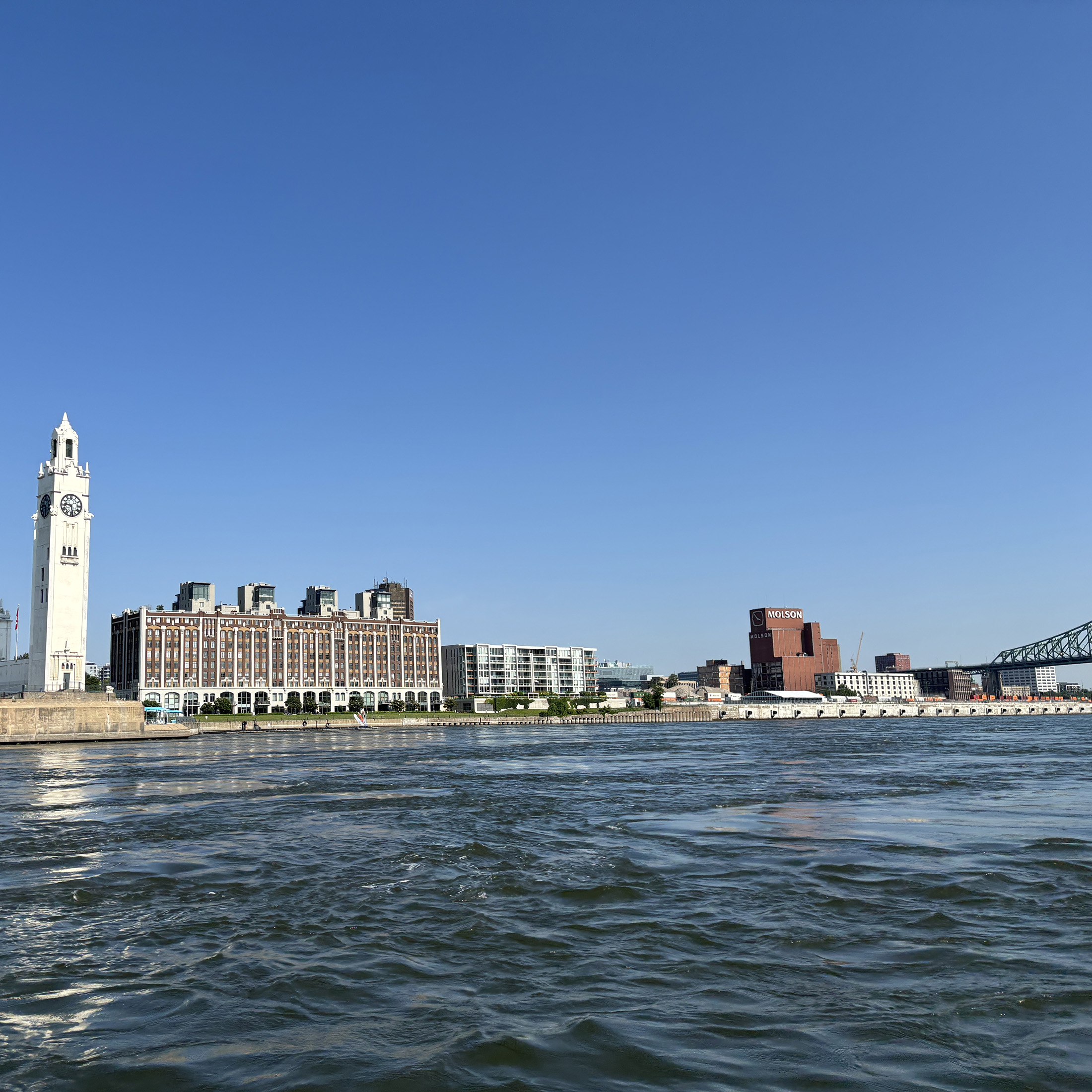
Learn more about some iconic landmarks, including the Clock Tower, the former cold-storage warehouse, the Jacques Cartier Bridge and the former Pied-du-Courant Prison.
Read the transcript
The shuttle arrives and departs from the Old Port, where Montreal’s history began. From the city’s earliest days, life revolved around the river. The first ships came here to trade goods, businesses sprang up along the waterfront, and over time, the port took shape. Permanent wharves were built, warehouses multiplied, and Montreal grew through maritime trade.
Today, the Old Port welcomes pleasure craft and river shuttles like this one, as well as cruise ships departing from the Grand Quay for Europe and the United States. And beginning in winter 2027: winter cruises!
The white tower that has marked the entrance to the port for more than a century is the Clock Tower. It commemorates the Merchant Navy sailors who lost their lives at sea during the First World War. Today, the site features a beach and a waterfront promenade. Until the 1970s, however, the area was occupied by sheds and conveyor galleries. As container terminals were developed, port activities moved eastward and the entire area was redeveloped.
The large brown building nearby is the former cold-storage warehouse. Today, it houses luxury condominiums, but when it was built in 1922, it was the largest refrigerated warehouse in the world. Meat, dairy products and other perishable foods were stored across its nine floors using a modern ammonia-based refrigeration system. The four towers on the roof are not chimneys: they were part of the building’s fire-protection system. Today, they contain some of the building’s most impressive apartments.
You can also see former industrial buildings, including the Molson brewery and the Canada Rubber Company buildings, a company famous for its rubber boots. Their location here was no coincidence: these businesses wanted to be close to the port, which made it easier to distribute their products.
The shuttle passes beneath the Jacques Cartier Bridge. When it opened in 1930, it was known as the Harbour Bridge, a reference to the Harbour Commission—the former name of the Montreal Port Authority—which oversaw its construction. In the late 1950s, the bridge’s southern section was raised to allow ships using the new St. Lawrence Seaway to pass underneath. Today, more than 100,000 vehicles cross the bridge every day, along with hundreds of thousands of pedestrians and cyclists each year.
Just to the right of the bridge is the former Pied-du-Courant Prison. Did you know that a tunnel was built along the wharf to provide direct access from ships to the prison?
Here, the river, wharves, bridges and former industrial buildings all tell the same story: Montreal was built with its sights set on the river.
Stop 2
Dry bulk
Grain, salt, sugar, ore and even oversized cargo: discover the goods handled and the impressive facilities in the dry bulk sector.
Read the transcript
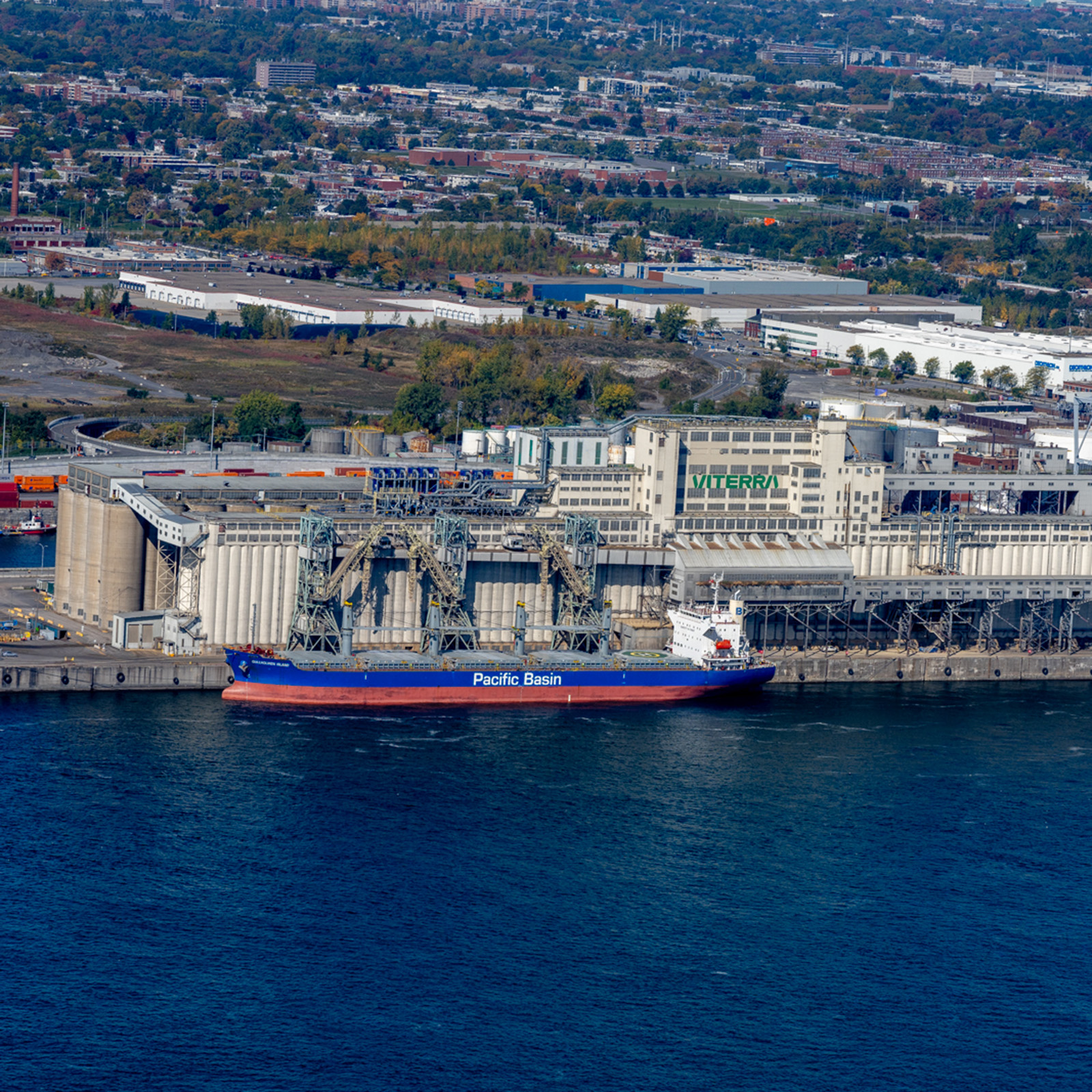
The dry bulk sector looks very different from the container terminals. Here, operations revolve around bulk commodities—goods transported without packaging, directly in ships’ holds or in silos.
Every year, millions of tonnes of grain, ore, sugar, salt, gypsum and fertilizer pass through these facilities.
Take salt, for example. Every winter, the roads you travel on are likely de-iced using salt that passed through here. Between 300,000 and 400,000 tonnes arrive from the Magdalen Islands each year before being distributed throughout Quebec and Ontario.
These docks also handle oversized cargo. Components for the new Champlain Bridge, a massive tunnel-boring machine used to excavate the Montreal metro, and even wind turbine blades have all passed through these facilities.
You will also see warehouses and buildings that recall a time when Montreal was one of the world’s leading grain ports for much of the 20th century. Grain harvested in Western Canada arrived by train before being shipped to Europe. To accommodate the growing volumes, grain elevators were built in this sector to relieve congestion in the port facilities located farther west.
The massive Bunge grain elevator, for example, is still in operation. With its 350 silos, it can store up to 260,000 tonnes of grain. It is also the only grain terminal on the St. Lawrence equipped with three loading spouts, allowing ships to be loaded at a rate of up to 5,500 tonnes per hour.
This industrial landscape reveals an essential part of the Port of Montreal’s story: for more than a century, the raw materials that supply our cities, our industries—and even our kitchens—have passed through here.
Stop 3
Containers
Massive cranes, 300-metre-long ships and thousands of containers: discover how these facilities keep the goods we rely on every day moving.
Read the transcript
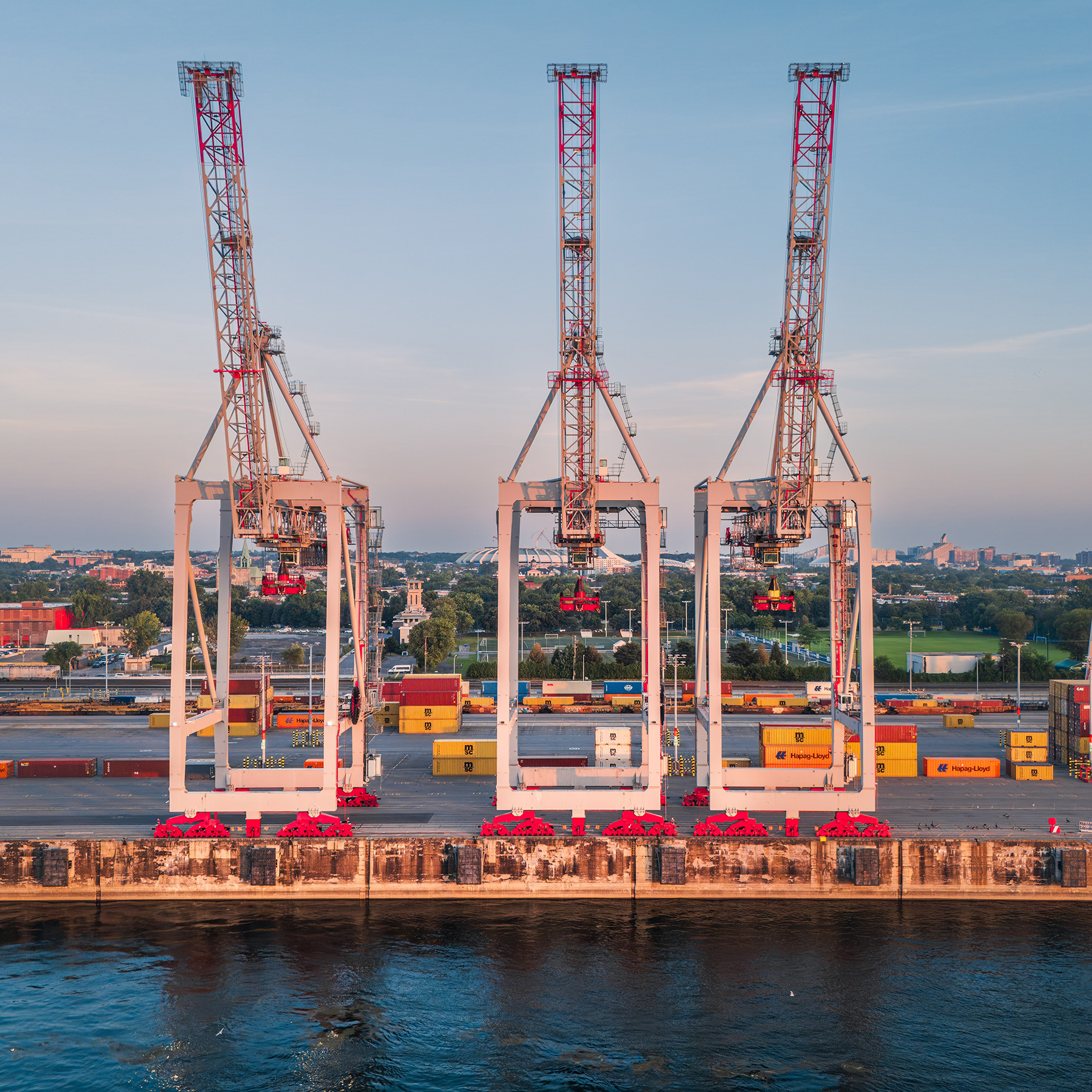
The Port of Montreal’s four international container terminals are instantly recognizable by their immense gantry cranes, specially designed to load and unload containers from ships.
This is where a small revolution began. In 1968, the Port of Montreal opened Canada’s very first container terminal: the Cast terminal, at the eastern end of this sector. At the time, containers completely transformed maritime transportation. By standardizing cargo dimensions, they made it possible to load and unload ships much faster. Today, the four terminals are operated by two companies: Termont and Montreal Gateway Terminals Partnership. The newest, Viau terminal, at the western end, was completed in 2020.
Each crane can lift more than 60 tonnes and move nearly 200 containers in just eight hours. Every year, more than 1.5 million containers pass through the Port of Montreal. Some arrive by truck or train before being loaded onto a ship. Others make the journey in reverse: they arrive by ship and quickly continue on to businesses throughout Quebec, the rest of Canada or the United States. The terminals are not designed to store goods: the goal is for containers to remain there for less than three days.
But what do they carry? Imports include coffee, wine, clothing, furniture and electronics, for example. Exports include soybeans, lentils, maple syrup and forest products.
In fact, there is a good chance that the phone you used to scan this QR code, the headphones you are using to listen to this audio guide, or the coffee you drank this morning passed through here in a container like the ones on those terminals.
And the ships that dock at these terminals are just as impressive as the operations themselves. The largest container ships calling at Montreal are around 300 metres long—the equivalent of three soccer fields placed end to end.
Each container you see is one stage in a much longer journey. Some have just travelled thousands of kilometres across the ocean, while others are about to cross Canada by train or truck.
Stop 4
Liquid bulk
This sector may seem quiet, but it is one of the port’s busiest: products flow through an extensive network of pipelines connecting ships, storage tanks and distribution facilities.
Read the transcript
Located at the eastern end of the Port of Montreal, the liquid bulk sector may initially seem much quieter than the container terminals or the dry bulk sector, where commodities such as grain and sugar are handled. Yet it is one of the port’s busiest areas.
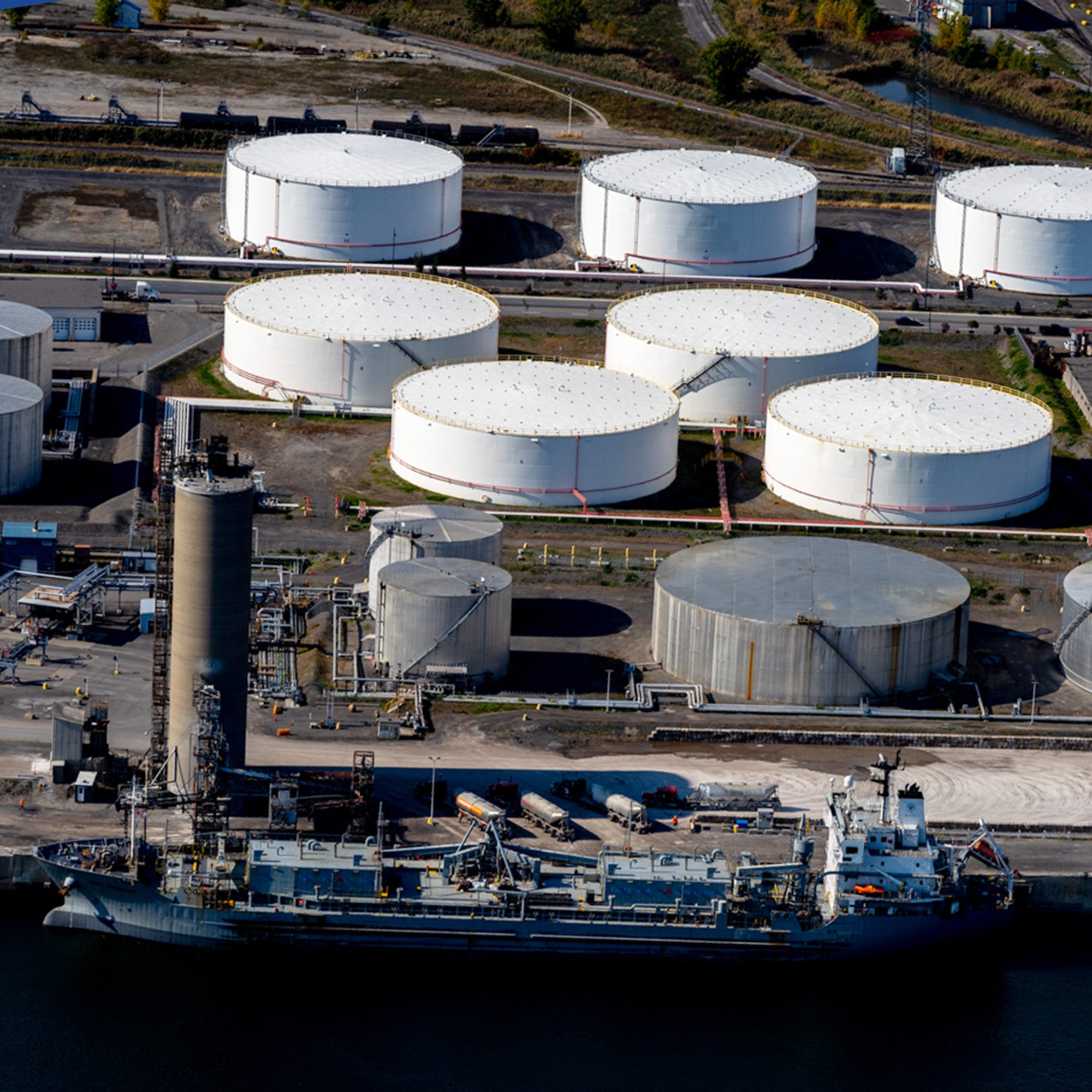
The reason is simple: here, the cargo is rarely visible. Once a tanker is moored at the dock, products flow discreetly through a network of pipelines—like a vast plumbing system connecting ships, storage tanks, refineries and distribution networks.
The sector includes six terminals operated by various companies, including Shell, Valero, Suncor, Norcan and Parkland. Together, they handle between 10 and 15 million tonnes of liquid cargo every year.
The large white tanks are used to store the various products handled here. Altogether, they can hold no fewer than 14 million barrels! Ships dock at one of 13 berths, where large metal structures known as marine loading arms are connected directly to the vessel. Pumping stations then move the liquids through pipelines to the storage tanks, and onward to refineries or loading facilities for tanker trucks and railcars. Everything is designed to keep the products moving quickly, efficiently and safely.
Behind these facilities is an extensive safety system. Leak detectors, fire-suppression foam systems, emergency shut-off valves and other detection equipment help prevent incidents and ensure a rapid response when needed.
This sector is often associated with petroleum—and with good reason. Products handled here include the gasoline that powers our cars, jet fuel and the diesel used to transport goods. But the liquid bulk terminals receive many other products as well. These include asphalt used to build or repair roads, ethyl alcohol used in fuels and industrial applications, molasses intended for animal feed or the production of certain foods, and fertilizers that are essential to agriculture.
Although it receives less attention, this sector is an essential link in the supply chain. The products that pass through here support transportation networks, industries and businesses, before being distributed throughout Quebec, Canada and abroad.
THE PORT OF MONTREAL
A maritime hub at the heart of the continent
The Port of Montreal is a diversified port that handles containerized cargo as well as dry and liquid bulk. Its facilities extend 30 kilometres along the St. Lawrence River, connecting Montreal to numerous international markets.
1.5 M+
TEUs handled annually
140
countries worldwide
34.3 M
tonnes of cargo annually
37,000
direct, indirect and induced jobs
IN COLLABORATION WITH